








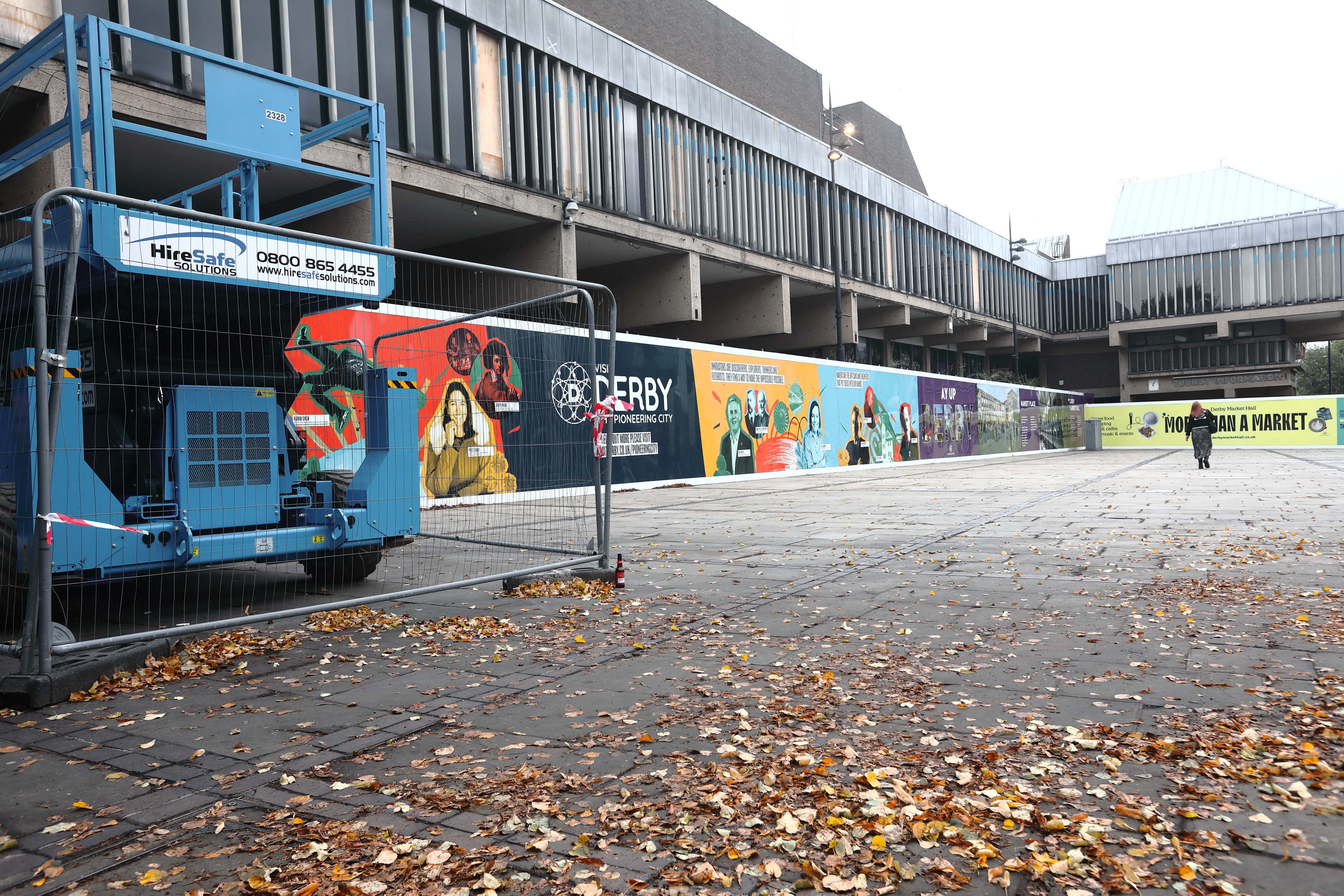
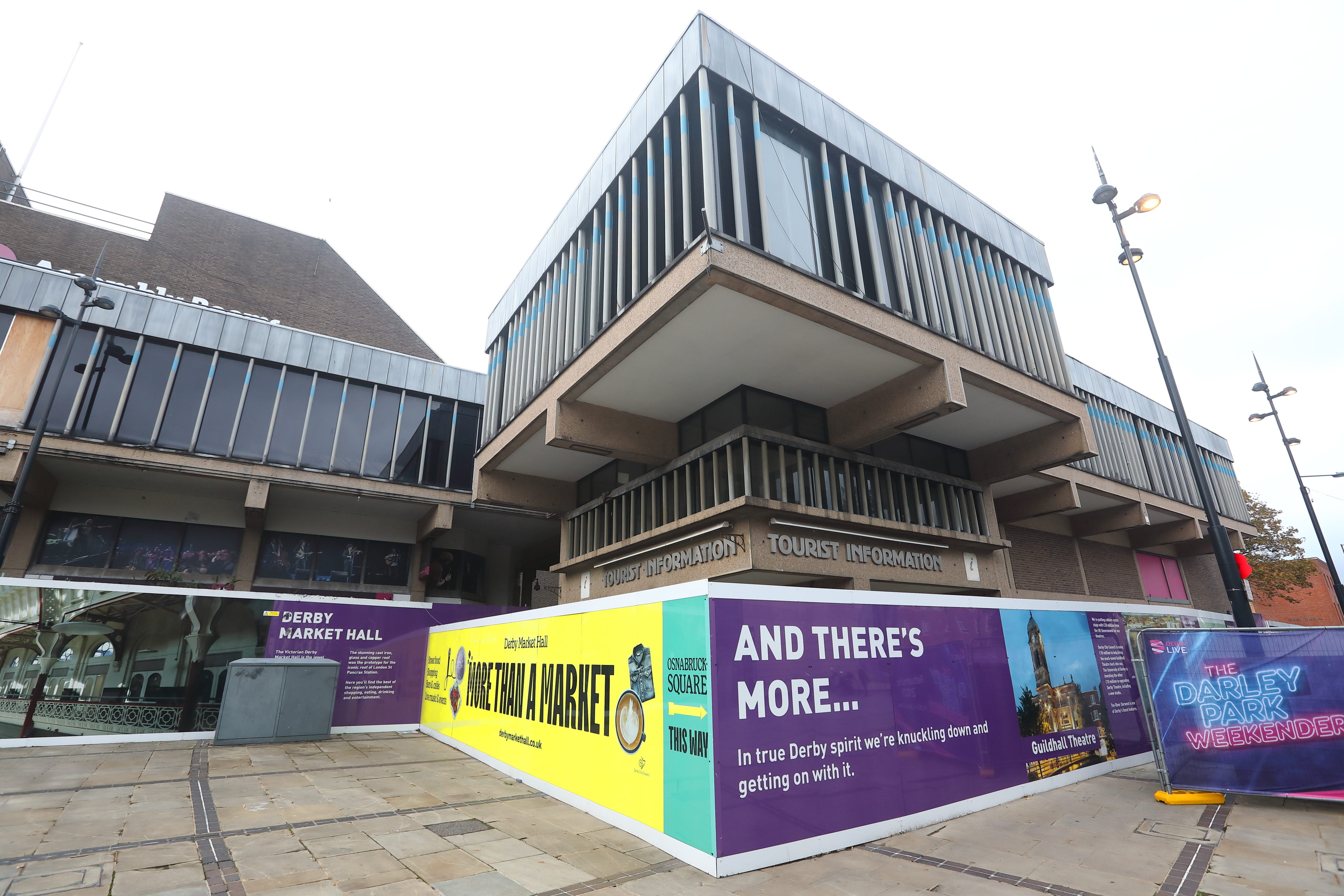
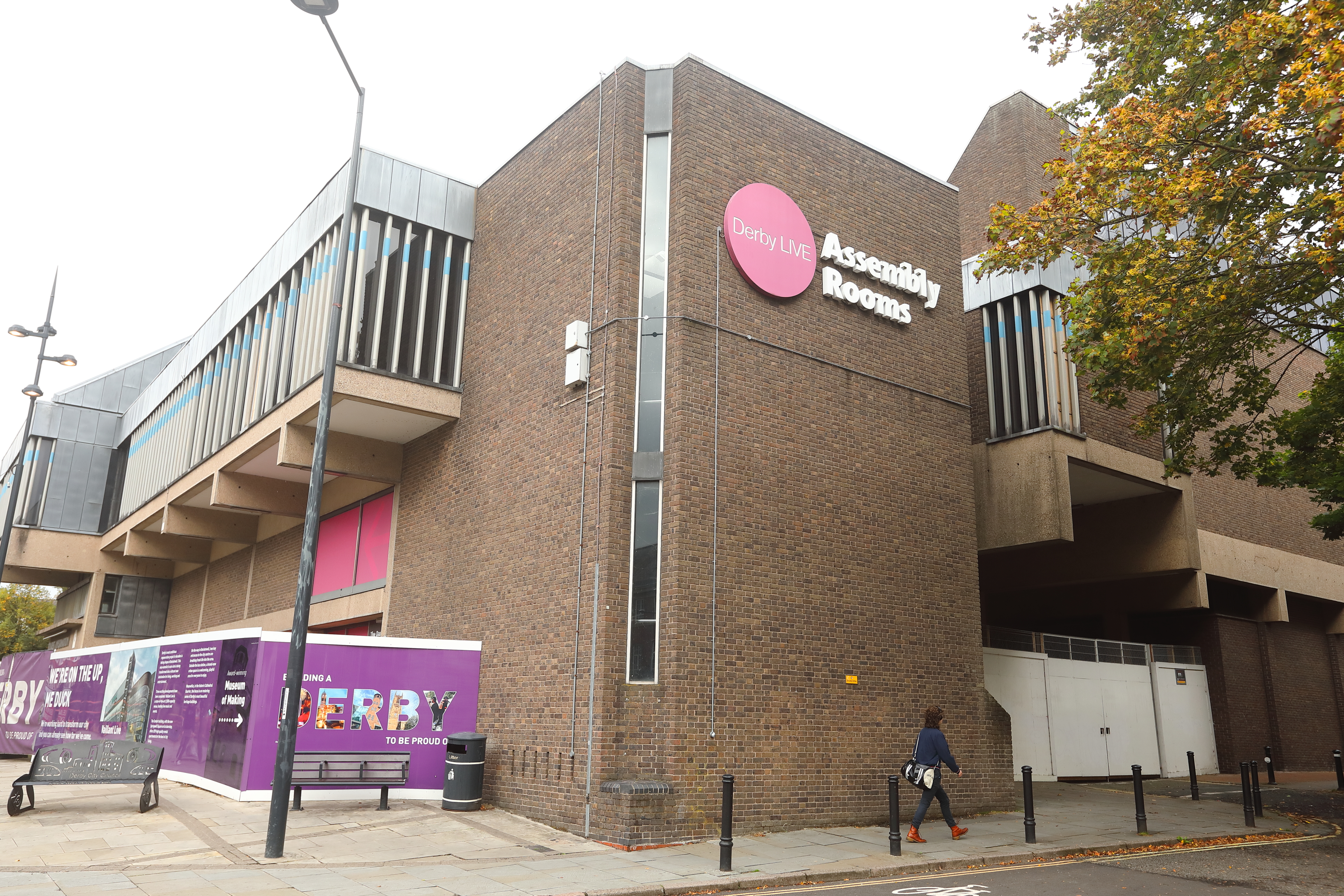
When Derby City Council approved demolition of the Assembly Rooms, it imposed a planning safeguard specifically intended to ensure the building could not disappear without a redevelopment scheme ready to follow it.
That safeguard has now been discharged and demolition can proceed. But scrutiny of the agreement used to satisfy it raises a fundamental question: where is the committed completion date for the redevelopment?
Background to Condition 3
Over the last six years there have been several attempts to demolish the venue which have been constrained by a strict planning condition imposed by Derby City Council.
The 2020 planning application (20/00899/CAD) to build a new venue was subject to Condition 3 which stated that:
“No demolition works shall take place until a scheme for the comprehensive redevelopment of the site has been submitted to and approved in writing by the local planning authority and until that approved scheme is covered by a contract with an approved timeframe for its implementation.“
This stated reason for Condition 3 was:
“To ensure that the Assembly Rooms is not demolished in isolation of any redevelopment scheme”
A 2024 planning application (24/01135/DISC) was rejected as it failed the requirements of Condition 3.
“We are concerned that demolition could proceed without secured contracts, reports and formal agreements in place to offer confidence of the successful delivery of a regeneration scheme”
Derby City Council Planning Officers felt that without formal committed plans for delivery of a replacement, there was a risk that following demolition there would be an unsightly empty space in the City Centre for an indefinite period.
Subsequent attempts to develop the site were stalled as the threshold of Condition 3 was, practically, difficult to achieve.
Condition 3 is changed
To address this, a planning application (25/01861/VAR) was submitted to amend Condition 3 in a subtle way; this changed the word “contract” to “Development Agreement” ; it still required a “timescale for implementation”. The change arguably lowered the threshold imposed by the original Condition 3, replacing the requirement for a “contract” with a “Development Agreement”
In 2026 a Master Development Agreement (MDA) was agreed with ION, including a timescale. On the basis of this, the Planning Committee agreed that, finally, Condition 3 had been discharged and demolition could proceed.
However there are questions to be asked:
Where is the completion date?
Normal programme-management practice for a development of this complexity would ordinarily identify milestone dates, dependencies and anticipated completion. Yet the documents relied upon here identify sequencing and commencement triggers without setting overall completion dates.
The MDA for the Assembly Rooms project provides an outline sequencing of phases, a relationship between phase start dates, but no corresponding completion dates.
The “Partners Statement”, included with the Planning Application notes:
The Phase Agreement will also include longstop dates and milestone controls, although the specific timeframes remain to be agreed.
The question is whether an agreement that specifies when phases may begin, but does not commit to when those phases will finish, genuinely provides the “approved timeframe for implementation” required by Condition 3.
The demolition phase is committed, and the Council says demolition itself is expected to take around 12 months. The later development phases appear principally to be commitments to enter further agreements rather than commitments to complete construction by defined dates.
The seven-year MDA could produce an 8.5-year programme
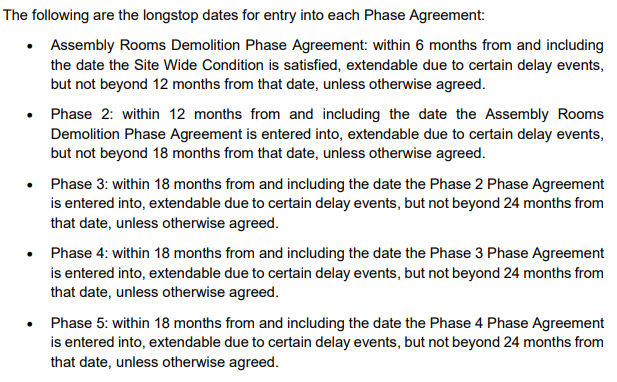
The plan in the MDA gives very loose timescales for each phase. To recognise that delays may happen it contemplates a wide time window between each dependent start date.
In the event that each phase starts at the latest point specified in the MDA Legal Note, this will mean that Phase 5 starts after the end of the 7 year MDA. If Phase 5 can commence only after the seven-year MDA period has expired, that raises a serious question about whether the agreement itself provides an implementation timeframe covering the whole redevelopment, as Condition 3 appears to require.
The following are the sequential time intervals to start of each phase:
- Phase 1: up to 1 year
- Phase 2: up to a further 1.5 years
- Phase 3: up to a further 2 years
- Phase 4: up to a further 2 years
- Phase 5: up to a further 2 years
- Maximum cumulative period: 8.5 years
The Partners Statement contained in the Discharge planning application states.
“The MDA runs for a maximum period of 7 years by which time all phase developments agreements need to have been entered into.”
The documents cited in the discharge application do not appear to identify an extension mechanism. That seems to create an apparent tension between the MDA’s seven-year maximum duration and the 8.5 year cumulative period produced by the stated maximum phase intervals.
Two different documents with two different phase sequences
In the documents supporting the Condition 3 discharge planning application (26/00977/DISC) there are two contradictory statements on the top-level phasing of the programme.
In the “MDA Legal note”, it states:
The development is therefore divided into five phases:
- Demolition of Assembly Rooms
- Derby Hotel;
- Derby MADE;
- Derby Works; and
- Market Place.
The formal Partners Statement provides a different phasing putting Derby MADE ahead of the hotel.
“This process will commence with an agreement for the demolition of the Assembly Rooms and associated Multi Storey Car Park. This will be followed by the phased agreement for Derby Made which will need to be entered into within 12 months of the completion of demolition phase agreement. Similar sequential timeframes have also been set for the remaining phases of development.”
That is more than a drafting discrepancy. If the MDA relies upon sequential trigger dates between phases, the order of those phases determines when subsequent obligations arise. Two different sequences therefore make it difficult to establish what the actual contractual programme is.
Comment
What does the agreement actually guarantee?
The decision appears to rely primarily on legally binding arrangements for entering future phase agreements rather than binding commitments to complete those phases by defined dates. That may satisfy a narrow interpretation of the amended wording, but it is much harder to reconcile with the original purpose of the condition: ensuring that demolition did not take place in isolation from redevelopment.
The purpose of the condition was to secure sufficient certainty over implementation so that demolition would not take place in isolation. In programme management terms, that would ordinarily be expected to include meaningful milestones, dependencies and anticipated completion dates.
The documentation tries to suggest that, due to the nature of the project, it is not possible to fully contract the whole programme from the outset. The complexity of the regeneration may explain why individual phase agreements will be required. But complexity does not remove the question Condition 3 was designed to answer: what assurance exists that demolition will actually be followed through to completion of the redevelopment?
The hole-in-the-ground question remains
Condition 3 was intended to prevent demolition in isolation from redevelopment. The Council has now authorised demolition on the strength of an agreement that appears to prescribe when future agreements and phases should begin, but not when the redevelopment must be finished. Does that genuinely provide the delivery certainty Condition 3 was created to secure?
Please Share this Post, thank you...

Categories: Uncategorized


