








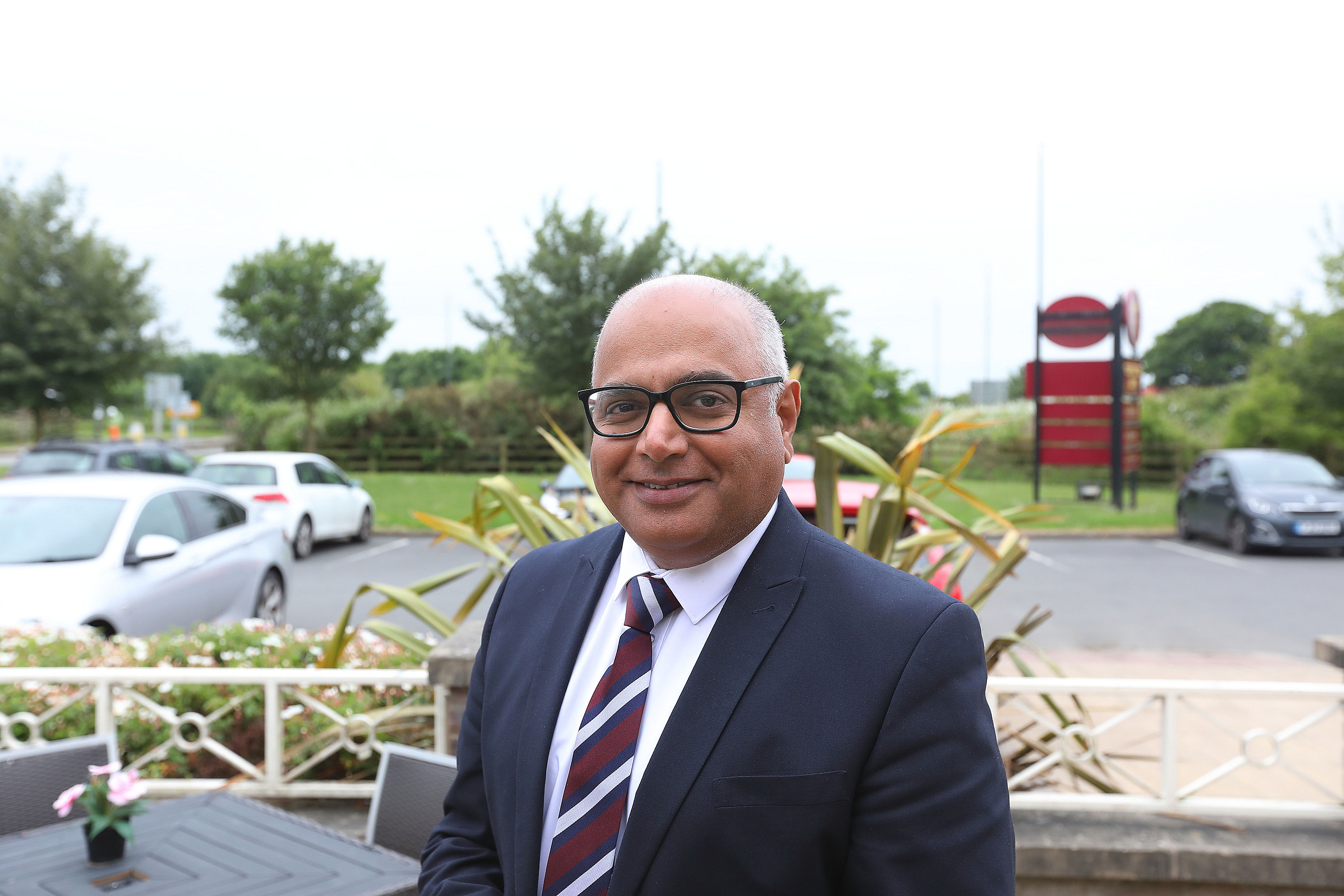
The newly appointed Leader of Derby City Council, and Leader of the Labour Group in Derby, Cllr Baggy Shanker, was elected on the strength of a manifesto which detailed specific policies with commitments on timescales. Whilst some will necessarily take time and are committed within the life of the 4 year administration, some are immediate term and within the next 12 months. It is these that the public will be keen to see implemented and there will be an expectation that decisions will be being tabled at Cabinet meetings, soon, that turn these promises into reality.
In the first significant interview, post election, I met with Cllr Shanker to ask about how he plans to run the administration, those shorter term policy deliverables as well as the issue that will be uppermost in the mind of his Ward constituents – the Sinfin Incinerator!
Derby News (DN): How will you make your administration different to the Tories, over the last 5 years, or the Banwait era prior to that? How will the public see a difference?
Cllr Baggy Shanker (BS): We have specific, tangible, pledges that we’ve made and I’m saying to my colleagues in the administration that this is the minimum we have to deliver. We’ve spoken to people, we’ve set these priorities from those conversations and people have put their faith in us. The way we repay that, is that we absolutely deliver on those tangible pledges that we’ve made. That is what will differentiate us from previous administrations.
DN: What about the style of administration, how will that be different?
BS: I’m a great believer in behaviours, relationships, and networking. Previous leaders from all groups have made the vision about themselves. My vision is not about me; my vision is about Derby and what the people of Derby need. There is a section in our manifesto about “Putting People First”. Politics is about people, and we should always bear that in mind, and putting people first with the priorities that we’ve set…from talking to people.
DN: The catchphrase that Cllr Poulter (previous Leader of the Council) used which came back to haunt him was “open and transparent”. Will you be more transparent?
BS: Absolutely, however I prefer to think of it in terms of being “authentic”. If you are being authentic then you’re naturally, open and transparent, and if there are things that you can’t say as they are genuinely commercially sensitive, or have legal implications, then you should give a valid reason. Not say, for example, that you’ll share the business case for the Becketwell Performance Venue at the next Scrutiny Board and then, within weeks, not share it at all. Not say, that I’m not going to increase Council Tax to the maximum and then increase it to the maximum for every one of the 5 years. That approach doesn’t do any of us any favours….just don’t say it in the first place.
DN: There are a lot occasions when the Officers say that an item is “exempt” ( not discussed in public) – you’ll now be in a position where you can challenge that?
BS: Exactly. I’ll do 2 things on that. Firstly, I’ll challenge anything that I’m told is in exempt and make sure that it is justified and, secondly, to the best of my abilities, to request a non-exempt paper to contextualise what’s in exempt. Far too many times we’ve had items that are totally exempt with just a one-line statement in the agenda – that to me is unacceptable. There should be no items that are totally exempt. There are decisions being made on behalf of the people of Derby and they don’t even know the context – it’s just wrong.
DN : Within the officer infrastructure of the Council are there any areas where you can see opportunities for improvements, particularly with information flow to you as Leader to allow you to make more informed decisions and to be more up to date on status?
BS: Most people know that I’ve worked in the private sector in 2 of Derby’s largest companies as a professional qualified Project Manager. I think that helps. Although we’re not the professional Officers of the Council, we’re just lay Members to represent the public but I think it helps when you have the skills , background and knowledge to be able to test some of the recommendations from Officers.
I’ve got a reputation which I think I’ve proven at the Cabinet meetings over the last 3 years that I’ll ask the questions that aren’t covered in the papers, I’ll ask the questions that residents of Derby want to know the answers to even if it has meant that the Senior Officer or Cabinet Member has felt a bit awkward. I don’t want to get into that position. I think that information should be there in the reports – they should be all encompassing. That’s what I’ll be looking for.
DN: The Cabinet posts that you’ve announced have innovative titles compared to the traditional roles – what was the logic and thinking behind that?
BS: I just wanted them to be more meaningful. It won’t limit their boundaries. We made commitments that we would have someone with specific responsibility for the City Centre so we’ve done that. We said we would have someone with specific responsibility for Climate Change, and one for Equalities issues which we have also done. We wanted someone to look after people’s interests and how policy impacted people. How we create a more fairer and just Derby. We’ve done that. The titles reflect the structure and content of the manifesto to make sure that we deliver it.
As Leader I take responsibility for everything we’ll be doing.
DN: So will the Officer structure have to be modified to enable delivery of those objectives?
BS: I’ve go no intention of meddling with the Officer structure – it’s an operational task for the Chief Executive and Strategic Officers. It’s not my role to interfere with the day to day running of the Council. But they’ll be clear on what they’ll be expected to deliver. How best to organise themselves is for the Chief Executive.
Budget
DN: You said that you’ll review the budget. How will you actually do that?
BS: I’ve already asked for meetings in the coming weeks so I can go through it in far more detail than I’ve seen as the Opposition Leader. I want to make sure that the issues that we’ve committed to in the manifesto are deliverable with the correct allocation of staff and financial resources. What I need to understand is the choices that I’ve got to make – some things might have to give. I’ll do the work to be able to bring a paper to Cabinet that sets out the detail so the proposal can be scrutinised and a decision made.
DN: In reality 70%+ of the costs are statutory services ( Adult and Children services) so there’ll be a limited amount of wriggle room
BS: Absolutely. This comes down to the impact of austerity. Having said that there is over £200m in the revenue budget and over £200m in the capital budget – it’s still a fair amount of money that the Council spends every year.
DN: Do you really think there is “low hanging fruit” to deliver your promises?
BS: I think there is – probably less than there used to be . An example – there was no budget line to say that we would spend £150k+ for the trees in the Market Place that was decided in year. There are always choices.
DN: You mentioned about getting more money from Government – is that realistic?
BS: We’ll continue to do that. I think for the last 5 years that the administration hasn’t been strong enough in opposing Government constraints – not just within the 5 years but clawing back some of the previous cuts. There was a lot of money made available to Local Authorities during COVID, and rightly so. Whether that has been wisely spent is questionable but the the money was made available and at some point the Government will have to wake up and recognise the amount of previous cuts, compounded with the additional burdens on Councils passed from Central Government – they’re going to have to find the money to adequately fund Councils. Otherwise more and more Councils will collapse.
We’ll never give up on lobbying Government – we just need to do it a bit more forcefully than has happened in the last 5 years.
DN: Back in January you described it as a “Bad” budget which implies that there is a better budget. Was that just a political statement?
BS: The outturn every year has proven that they have not been “remarkable” budgets ( as described by the previous Leader) but bad budgets. They’ve overspent badly, and they relied on the use of reserves heavily. It will be interesting to see what we see at the end of the 1st quarter of this financial year. I don’t think the warning signs of pressures in Adult and Children’s services have been taken seriously enough. You can’t spend year after year and then not make the provision in the budget and expect the problem to go away.
DN: But the implication of that would be, for example, with Children’s Services, that to budget for it correctly, you would have to add in another £6-7m in the year which would make the balancing of the budget impossible.
BS: Yes – but you either fund it adequately or you do something differently. Doing the same thing each year and expecting a different outcome is not clever. We need to work with supporting Officers at all levels of the Council and empowering them to look at different ways of supporting the residents of Derby. And at the same time to continue to lobby for the appropriate levels of funding. The balance is somewhere in between there.
DN: But that would suggest that all the previous efforts in improving the operation of Children’s Services have not been effective and that there are opportunities left?
BS: We just have to face reality – we have a certain amount of money, we have statutory services to deliver, and very few discretionary services. We don’t have the option to overspend with the Governement picking the bill up at the end of the year like the NHS. I don’t believe a balanced budget is one where you’ve heavily relied on reserves at the beginning of the year and then topped it up again from reserves at the end of the year – that’s bad budgetting.
DN: The Council Tax for this year won’t change?
BS: No – the bills have gone out so that’s fixed. Our national policy was to freeze Council tax and to seek a subsidy from Central government to do that, and to help people through the cost of living crisis. That was the right thing to do. It was a choice that the Tories, nationally, didn’t do and locally, the Tories didn’t push for it. It would have been a great help for lots of residents.
DN: So that would rely on an increased grant from Central Government?
BS: Yes – so it’s sustainable.
Consultations
DN: You describe in your manifesto that you plan to be more inclusive or innovative in future consultations which, in the past, have tended to be “tick box” exercises. How will this be different?
BS: I go back to what I said earlier about being authentic. There will be difficult decisions to take; if we’re going to consult with the view that the outcome will impact the decision then we need be clear and say that up front. If we’re going to consult to understand the impacts and possible mitigations but fundamentally the decision won’t change because you’re forced down a particular route then we should be clear. The consultees should know the purpose and whether or not their view will be ignored completely – the prime example being Ashgate Nursery. ( DN: The overwhelming response from the public was to keep it open followed by frustration when the decision was taken to close it )
Sinfin Incinerator
DN: People in Sinfin will be expecting decisive action on “putting this to bed” once and for all, accepting that in the manifesto, it is subject to legal and commercial issues. How can you reassure people that there will be actual progress towards this goal of permanent closure?
BS: This has come up a number of times before and after the election and our position is in the manifesto. We don’t want to restart it, we don’t want to spend money on repairing it, and we’ll do everything we can within legal and financial constraints that we have to operate in as a responsible Local Authority. The reassurance I’ll give, is based on my record of being opposed to the Incinerator from the outset, back in 2008, when I was first elected – it is completely the wrong strategy. I’ve attended Community Liaison groups with residents and held the construction partners to account. I wasn’t surprised when it shut down in 2019.
I don’t believe that it’s a wise investment to put more money in to try and make it work without any performance guarantees. A considerable amount of money is required to even try and get it working. Derby needs a sustainable waste dispoal strategy which looks after Derby, uses existing sites, increases recycling rates , and then move on. It’s a bad project that’s gone badly wrong.
DN: To what extent is the Council committed through signed agreements?
BS: I have a series of briefings planned in and I have questions to be answered which will put me in a position where I can give Officers a clear strategic direction.
DN: Is there a risk that Officers will come back and say “Sorry, but we’ve signed up this now – you’re committed“
BS: There were clear commitments to go out for a procurement exercise on “repair and restarting” – not a ” we’re going to do this” position. The approved exercise was to see if someone would be able, capable and interested. As far as I’ve been told there are clear decision points in the future. This is completely separate from the litigation case going on over the build costs.
DN: At the moment the plant doesn’t work, so the procurement exercise would be to find someone with the technology to make it work?
BS: That’s right. And of course the original design and construction partners couldn’t make it work. Some will say it sort of worked; as far as I’m concerned it didn’t pass the acceptance criteria that was agreed in the original agreement.
DN : Is this the sole decision of Derby City Council or is it in conjunction with Derbyshire County Council?
BS: From everything I’ve seen it’s a dual approach – so a joint decision by the City and the County. We’ll have to cross that bridge when we get the details. There’s not much more I can say other than that my position is very clear and that’s what I’ll set out to achieve
Bulky Waste collection
DN: On bulky waste collection, which is just revitalising something that was there before, when do you see that starting? It should be straight forward to implement?
BS: I’d hope so. I don’t know exactly when we’ll start that until we know the detail. It’s a really important service that helpled neighbourhoods across the whole City and , in my view, has a direct correlation with fly-tipping. It doesn’t justify it but it correlates with it. We want to reintroduce it as soon as possible.
Again, we’ll be responsible and make sure that it’s properly funded before we start doing it and before we announce any dates.
Libraries
DN: We had a number of nebulous alternatives from the Tories which seemed to end up with a Community Hub that might have books in it but which would be completely disconnected from the Council library system and book sharing facility so it ceased to be a library in the traditional sense. Is your position that it’ll be a library as we all would understand it to be ?
BS: Absolutely. My view is clear on this – we want to keep all 10 Community Managed Libraries open. They have to be functioning libraries. Any additional services delivered from the libraries ( which was the strategy 5 years ago) which would enhance community cohesion, provide services for the local residents etc are all well and good but it has to be additional to, fundamentally, having an operational library.
We will do the necessary work, come up with robust plans which are workable and sustainable.
DN: Would you see them being owned by the Council or a 3rd Party?
BS: I’m absolutely relaxed on the solution – it’s the outcome that’s more important. They’ve got to stay open as libraries. We’ll talk to partners and I’ve already had conversations, even before the elections – lots of concerned residents and partners are raising issues with us. Lots of organisations have asked as to whether they can get involved. That’s the detail that we need to go through now.
DN: Would your vision be that they’re part of the library computer network, book sharing etc?
BS: I’d be delighted if that’s what we can deliver. I’d want to deliver that however I’ve not yet met with the potential operators. So it would be irresponsible of me to commit to doing that. If it’s not networked with the statutory services it must be within the 10 so that they can communicate, share books etc and so the people get the benefit across the City.
DN: And access to computers….?
BS: Yes, and the internet, meeting spaces, clubs are all important – but it must be a library at its core.
Neighbourhood Teams.
DN: You’re going to clarify the focus on the Neighbourhood teams, including Anti-Social Behaviour, do the Teams include the Public Protection Officers (PPOs)?
BS: The Council’s been moving to this “Localities” model. Fundamentally I don’t oppose that. They include Neighbourhood Officers, Safety Officers, Local Area Co-Ordinators and the PPOs. What we’ve seen under the Tories is that the number of PPOs has reduced from 20 down to 10. We’ve also seen the role of the PPO diluted. I found out a few days ago that the PPOs in the City are not issuing many fines. That’s worrying. I’d love to be in a position where no fines have been issued because everyone’s doing the right thing – not fly tipping, not dropping litter, parking on grass verges etc but we’re not there yet. We have issues and the PPOs should be out there educating and, if necessary, penalise. The idea that there are no fines is not a reflection of where we are.
They are very good asset to change people’s behaviours.
Ashgate Nursery
DN: This is one of your headline commitments to keep the Nursery open. The decision was taken in the Cabinet meeting a few months ago to shut it. Do you just reverse the decision?
BS: This is one of those simple issues for me. I read the documentation and the consultation, the reasons for wanting to shut it and I can categorically say that I did not agree with any of the actions of the previous administration. We’ve tasked Senior Officers, and Cllr John Whitby is leading on this. The steer is clear – there is no intention to close the Nursery. The evidence is out there that warrants it staying open.
DN: When will a decision be made? Recognising where we are in the school year.
BS: We want this to happen in weeks rather than months. Otherwise there won’t be enough people on the roll which will add weight to the argument that it’s not viable. I think it is viable.
Equality Alliances.
DN: Are there are new alliances that you have in mind beyond those already established (Food, Youth, Faith etc)?
BS: Not specific areas. What I would say is that over the last few years lots of people have demonstrated during COVID how much they really care for our City. We’ve got a really good understanding and links between voluntary groups, community groups, and local businesses – and they all want to help. And the Council’s role is to harness that and support it. The Council won’t be able to provide funds for these groups to come together, but what it can do is act as the “mortar between the bricks”.
SEND provision
DN: Many parents don’t think it works well. Would you plan to do a major review and / or get more people involved who are actually affected? Like a Truth Commission?
BS: I think the Poverty Truth Commission is a great idea and we’ll support it wholeheartedly. I’ve spoken many times in the Chamber about “lived experiences” and there is so much we can learn from that. With SEND I don’t rule that out. We want to provide the right support. The Cabinet Member will be talking to people and be tasked with establishing what that right level of support is.
City Centre Task Force
DN: How will this tie in with the existing Business Improvement Districts (BIDs)?
BS: They’re already in place, and will continue however it’s about getting the right people together – there are lots of people with lots of good ideas on revitalising the City Centre. City Centres have changed from 20-30 years ago. They’ve got to be destinations for people to live, and that’s happening…they’ve got to be a destination for people to work, the City centre lacks good office space, and then when the footfall picks up then the entertainment venues, bars, restaurants etc will be revitalised.
DN: And hopefully encouraging businesses to occupy some of the empty shops on St Peter’s Street and other areas?
BS: Yes. We need to get the Task Force going. We need to work with the Police – people are telling me all the time that they don’t feel safe going to the City Centre – day or night.
Market Hall
DN: You mentioned in the manifesto about ensuring that the Market Hall is the right “place”? What does that mean as the die is cast on this?
BS: I mean – the “offer”. We started on the refurbishment many years ago and there have been delays in the last few years. It is absolutely critical that we get the “offer”, inside the building, right. It’s been kept a bit of a tight secret. Cllr Nadine Peatfield is working on that now and she’s already had meetings. We just want to make sure that the “offer” is right for businesses, and the residents of Derby who are going to use it.
Climate
DN: You’re going to introduce a Hub. How will that work work or is it still a concept?
BS: It’s a concept but I’m confident it’s deliverable. We’ve had a climate commission for the last 3 years and money allocated to it. But it’s not really done much. This needs to be a huge collective effort and we just need to start doing things.
The vision is that every report that goes to Cabinet will have a consideration of the impact on People, Climate and the Socio-Economic duty. They have to be considered together in the front of our minds, consciously.
Comment
Close watchers of Council business will know that very few Cllrs have access to any meaningful level of information that allows informed decisions. It is evident from history that those Cllrs who should know the detail, mainly the relevant Cabinet member, don’t always know either, and the system heavily relies on their personal qualities. Officers are reticent about offering information that they’ve not been asked for. In recent times there has been too much secrecy over decisions – led by Officers.
The biggest risk for a new administration is finding the “hidden nasty” in the early days, which will divert attention away from priorities.
In 2018, for the Tories, it was the A52 project overspend.
In 2023, for Labour, the single biggest risk will be the Becketwell Performance Venue and the fall out from the inevitable cost overrun on the 2020 fixed price contract. It’s already 6 months behind schedule.
The biggest task for the new administration is to re-build the reserves which have been depleted over the last few years through poor budgetting disciplines. This will only be achieved through creative measures in managing costs and additional funding from central Government.
For those unaware of the history – my previous article details it. Council’s depleted reserves flattered by COVID…for the moment.
Please Share this Post, thank you...

Categories: Uncategorized

 Derby News